
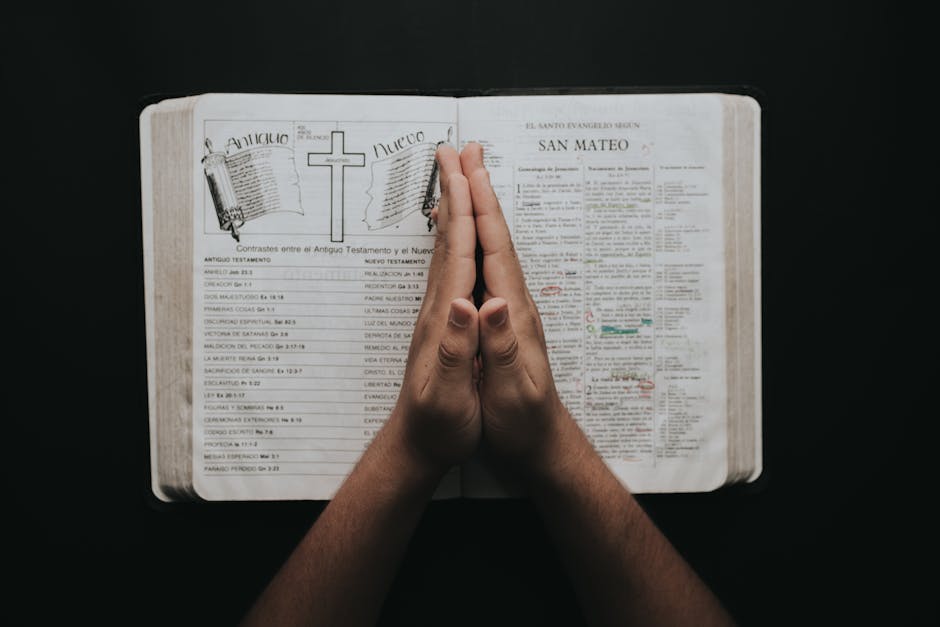
A healthy Bible habit leaves room for love, work, weakness, and interruption. Faithfulness grows through returning to God in ordinary life, not through maintaining an impressive record of visible discipline.
In 1924, Scottish runner Eric Liddell faced a conflict between Olympic competition and his conviction about Sunday worship. The 100 meters at the Paris Olympics was scheduled for a Sunday, so he declined to run it. His strongest event became unavailable because of that decision, and the outcome of his alternative was unknown.
Liddell later competed in the 400 meters and won the gold medal. The story is documented in his autobiography, The Autobiography of Eric Liddell. Its value for spiritual formation does not depend on treating athletic success as proof that every faithful choice will produce a public reward. Most faithful choices do not end with a medal.
The useful lesson is simpler. Liddell had to decide what his commitment meant before he knew how the decision would look to other people. He could not measure faithfulness by the applause that followed, because there was no applause yet.
Prayer and Scripture often place us in a similar position. You may read a passage before work and still have a difficult day. You may pray for a relationship and see no immediate change. You may miss several mornings because of illness, caregiving, travel, grief, or exhaustion. The practice matters, but it does not turn you into a machine. Its purpose is to help you attend to God and respond with wisdom, courage, repentance, gratitude, and love.
Why spiritual discipline becomes a performance
A habit becomes performance-driven when the visible record becomes more important than the relationship it was meant to support.
The signs can be subtle. You count uninterrupted days but avoid a passage that confronts you. You compare your quiet time with someone else's routine. You feel successful after a long reading session and ashamed after a short prayer. You keep going publicly while becoming distant privately.
These patterns can make spiritual practices feel like a scoreboard. Scoreboards can measure a game, but they cannot measure every condition that shaped the game. In the same way, a calendar may show whether you opened a Bible, but it cannot show the honesty of your prayer, the burden you carried into the room, or the patient action you took afterward.
That does not make consistency meaningless. Regular practice creates space for attention. The danger comes when consistency becomes the identity you must defend.
Build a habit around return, not proof
Choose a small practice that can survive an ordinary week. Read a short passage. Sit quietly for two minutes. Write one sentence about what you are noticing. Then choose one useful action that fits what you have read.
For example, after reading about patience, you might delay a sharp reply and ask one clarifying question. After reading about generosity, you might give practical help to someone who needs it. After reading about rest, you might stop treating every unfinished task as a moral emergency.
Keep the action specific and modest. “Be more loving” is difficult to carry into a Tuesday afternoon. “Call my brother during lunch” or “listen without interrupting for five minutes” gives the intention a shape.
Also record the limitation. A prayer habit cannot remove every source of suffering. Scripture can guide your response, but it does not make illness, poverty, trauma, or injustice disappear. If your routine collapses under a serious strain, you may need rest, practical support, pastoral care, or professional help. Returning to God can include receiving help from other people.
Let missed days lead to the next faithful step
When you miss a day, resist the urge to create a dramatic recovery plan. Read the next passage when you can. Pray honestly about why you stopped. Adjust the routine if its timing or size no longer fits your life.
A missed practice is information. Perhaps the reading plan is too ambitious. Perhaps your mornings are already occupied by children, medication, commuting, or shift work. Perhaps you need a paper Bible beside your bed instead of an app hidden behind several taps. Change the arrangement without turning the change into a verdict about your character.
The question is not, “How do I prove that I am disciplined?” Ask, “What is the next faithful action available to me?”
That question keeps the habit connected to its purpose. You may read less than you hoped and still speak truthfully. You may pray briefly and still choose forgiveness. You may begin again without making the beginning impressive.
Eric Liddell could not know what would happen after he declined the 100 meters in Paris. His decision had to stand before the result arrived. Your daily practice also has value before anyone sees it and before you can point to a measurable outcome. Open the passage, name what you need, and take one responsible step today.
Comments
No comments yet.