
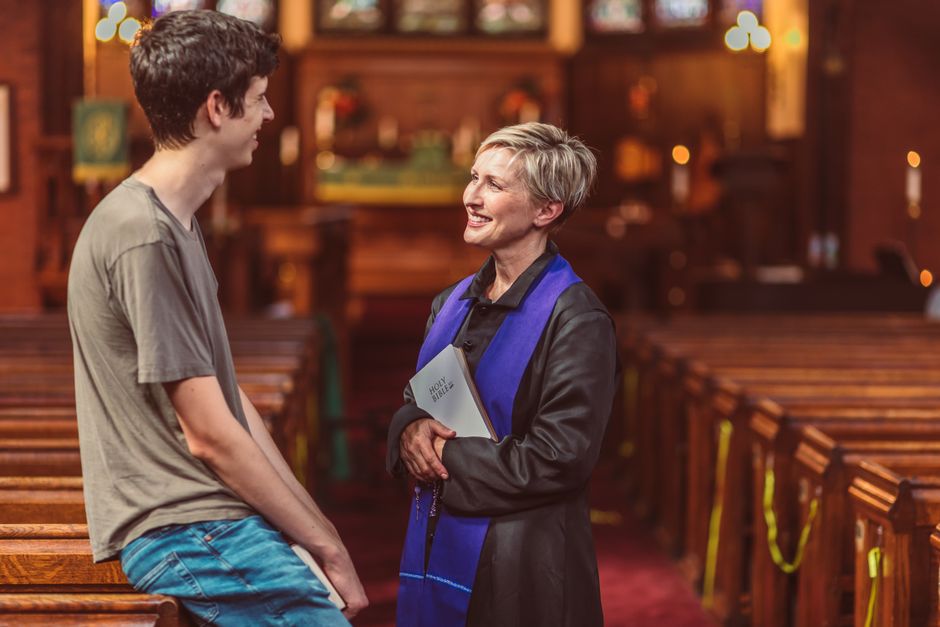
Faithful teens often struggle to connect belief with everyday life because Sunday convictions can feel abstract when a real decision arrives on Monday. The gap begins to close when faith becomes a question of one responsible action: how to speak, spend, study, apologize, rest, or serve today.
In April 1970, the Apollo 13 crew faced a problem no mission plan had solved. An oxygen-tank explosion damaged the spacecraft, carbon dioxide levels began rising, and the astronauts needed a way to make the lunar module’s square carbon-dioxide canisters work with the command module’s round openings. Engineers at Mission Control in Houston had to work with the materials already available, including duct tape, cardboard, and equipment on board.
The solution was tested under pressure. The crew followed the instructions, and the improvised system helped keep the carbon-dioxide levels safe enough for the astronauts to return home. Jim Lovell, Jack Swigert, and Fred Haise survived, but the outcome was uncertain while the problem was still unfolding. The story is documented in Jim Lovell and Jeffrey Kluger’s Lost Moon: The Perilous Voyage of Apollo 13.
The point for a teenager is not that every hard situation can be solved with enough discipline. Illness, grief, poverty, family conflict, and injustice cannot be reduced to a personal productivity problem. Apollo 13 offers a narrower lesson: under pressure, a conviction matters when it guides the next available decision.
A teen may believe honesty matters, then face a group chat where a friend is being mocked. They may believe their body and attention deserve care, then notice they are staying up late to avoid an anxious thought. They may believe forgiveness matters, then realize an apology requires naming what they actually did. The belief becomes visible through the choice.
Why Sunday belief can feel separate from ordinary life
Church language often gives young people big words: purpose, calling, holiness, courage, service. Those words matter, but they need a place to land. A teenager cannot always explain how a belief about purpose changes a homework decision or a friendship conflict.
Parents and mentors can make the connection easier by asking about a real moment instead of testing religious knowledge. “What happened today that made it hard to live what you believe?” is often more useful than “Did you have a good week spiritually?”
That question leaves room for honesty. The answer might involve doubt, anger, embarrassment, temptation, exhaustion, or simply forgetting. A faithful conversation does not require a polished response.
One conversation starter for today
Ask: “What is one situation in front of you where your faith could shape your next responsible step?”
Keep the question small. The next step might be telling the truth about unfinished work, putting the phone away during a conversation, asking for help, refusing to pass along a cruel message, or taking a real break before resentment grows.
Then ask a second question: “What would make that step harder?”
This matters because good intentions meet actual conditions. A teen may need clearer boundaries, support from an adult, a repaired relationship, more sleep, or protection from an unsafe situation. Encouragement should make room for those realities. It should never imply that failure proves weak faith.
For younger readers who are wrestling with uncertainty, faithful teenagers can admit doubt without pretending to have every answer. Doubt can become part of an honest conversation about what belief means when life refuses to stay simple.
Let belief become a daily shape
Work has a place in this conversation too. The Christian tradition treats meaningful work as part of human responsibility and service, while also recognizing frustration, limitation, and brokenness. A student’s ordinary responsibilities can become places to practice faith, but performance cannot become the measure of worth.
Tonight, choose one ordinary decision and discuss it without turning the conversation into a lecture. What happened? What did you want? What did you fear? What choice would reflect love, truth, wisdom, or courage? What help would make that choice possible?
On Apollo 13, the crew did not return safely because a slogan solved the crisis. People translated knowledge into careful action with the materials and limits in front of them. Faith grows in a similar way for a teenager, one honest conversation and one responsible step at a time.
Comments
No comments yet.