
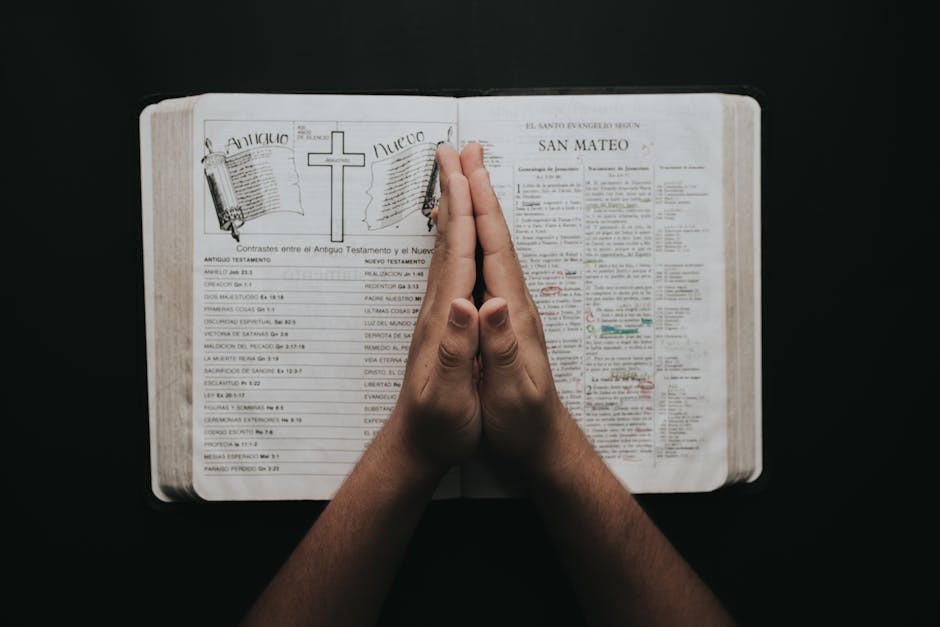
Grace is the foundation of Christian growth. Prayer and Scripture create room to receive, notice, and respond to God, but disciplined practice cannot purchase his favor.
At 6:40 on a Tuesday morning, Elena sat at her kitchen table in Chicago with an unopened Bible beside a cold mug of coffee. She had missed her prayer time for three days. Her workday started soon, and the thought arrived with familiar force: if she could not keep this habit, perhaps she was failing God again.
She opened her journal and stared at the empty page. A missed morning had become a verdict about her character. If she left for work without praying, she feared the day would begin under God’s disappointment. The possibility felt real enough that she nearly stayed home from a meeting she had prepared for all week.
Then Elena noticed what she had written at the top of the page: “Prove that I am faithful.” She crossed out the word “prove.” Beneath it, she wrote, “Come honestly.” She read a short passage, admitted that she felt tired and afraid, and prayed for the next responsible step. The meeting still mattered. Her fatigue still needed care. But she no longer approached God as an examiner waiting to record another failure.
Practices make room for attention
Prayer and Scripture can shape the way we see, choose, and live. A regular practice gives us a place to slow down, receive correction, remember what matters, and bring ordinary decisions into God’s presence.
That purpose changes the way we approach consistency. A habit can support attention, but the habit itself does not make us more worthy. Reading three chapters does not make God more generous than reading three verses. Missing a day does not place you beyond his reach.
This distinction matters because spiritual practices can quietly become performances. We may begin with a desire for communion and end by measuring ourselves against a private scorecard. The Bible becomes evidence for our religious seriousness. Prayer becomes a test we must pass before we can feel at peace.
A practice is healthier when it leads toward honesty, love, wisdom, and obedience. It becomes distorted when it feeds comparison, fear, or contempt for people whose routines look different.
The difference between formation and earning
The discipline of prayer can reveal our dependence. Scripture can expose our assumptions and redirect our attention. Silence can show us what we have been avoiding. These effects are meaningful, but they are responses to grace rather than payments made in exchange for it.
This also protects us from a harsh interpretation of failure. A missed practice may point to an overloaded schedule, grief, illness, exhaustion, distraction, or a need for wiser structure. The right response may be repentance, rest, support, or a smaller plan. Shame rarely supplies the clarity required to choose well.
A simple question can help: “What am I hoping this practice will earn me?” If the answer is approval, safety, control, or superiority, bring that answer into prayer. God’s kindness does not depend on presenting a flawless record.
This is one reason spiritual dryness deserves patience. Honest Prayer: What Mother Teresa’s Spiritual Darkness Taught About Praying Without Certainty explores how faithfulness can continue when emotional reassurance is absent.
Choose a practice that serves love
A useful spiritual habit should be small enough to begin and clear enough to repeat. You might read one paragraph before checking your phone, pray while washing the dishes, or write one sentence about what requires courage today.
The action matters because it turns attention toward God and the people entrusted to you. It does not become a spiritual transaction. If the practice makes you cruel toward your family, reckless with your health, or proud of your discipline, something needs reconsideration.
Elena kept the revised sentence in her journal. On difficult mornings, she did not always complete the routine she had designed. She did return to the same posture: come honestly, receive what is given, and take the next faithful step. Her Bible remained on the kitchen table, now beside a glass of water and a reminder to sleep.
Begin there. Choose one practice for the next week, make it modest, and release the demand to use it as proof that you deserve God’s favor.
Comments
No comments yet.