
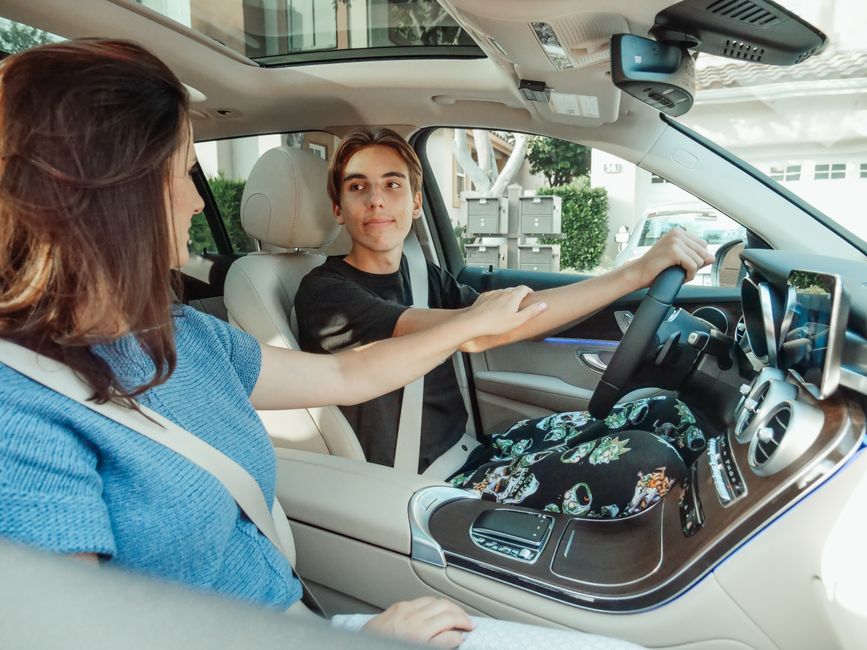
A car ride can lower conversational pressure for some teenagers because both people face forward, eye contact becomes optional, and silence feels less exposed. The setting may make it easier to speak, but it cannot guarantee honesty or replace patience, safety, and trust.
At 8:40 on a rainy Thursday evening, sixteen-year-old Micah sat beside his mother, Elena, as they drove home through Bristol. His football boots knocked against a water bottle on the floor. He had barely spoken since she collected him.
Elena knew something had happened at school. Earlier, a teacher had sent a brief message asking her to check in with him. If Micah stayed silent, he might have to face the problem alone the next morning. Elena wanted answers before they reached home.
She nearly began with, “What happened?”
Instead, she kept her eyes on the wet road and said, “You seem weighed down. We can talk now, later, or in pieces.”
For two traffic lights, Micah said nothing.
Then he spoke.
Why facing forward can ease the pressure
A face-to-face conversation carries demands that adults often overlook. A teenager may feel watched while deciding what to reveal. Every pause is visible. A worried parent’s expression can look like shock, disappointment, or anger, even when it comes from concern.
Sitting side by side changes some of those signals. Both people can look ahead. The passing streets give the eyes somewhere neutral to rest. A pause can blend into the drive instead of feeling like an empty space that must be filled.
That physical arrangement may help a teenager who monitors other people closely. A young person who has learned to scan faces, soften bad news, or hide personal needs may spend a face-to-face conversation managing the parent’s reaction. Less visual pressure can leave more attention available for finding words.
Micah began with a small detail: he had left a group chat. Elena felt the urge to ask who had said what and whether the school knew. She held the questions for a moment.
A minute later, the larger fear emerged. A private message had been shared, and Micah believed more classmates would see it by morning.
The car had not produced the truth. Elena’s restraint had made room for it.
Listening without turning the drive into a trap
Side-by-side conversations lose their sense of safety when the teenager realizes the ride was arranged as an interrogation. Locking the doors, taking an unexpected detour, or refusing to stop until a child talks can turn physical closeness into pressure.
The setting matters less than the freedom within it.
A parent can open gently: “You have seemed quieter since yesterday. I am available if you want to tell me what is happening.” Then leave space. One honest invitation usually carries more care than six versions of the same question.
Choice also helps. Your teenager may prefer to talk while walking, washing dishes, sitting in a dim room, or sending the first sentence by text. Some want direct eye contact because it signals full attention. Others find conversation in a moving car distracting or uncomfortable. A technique becomes controlling when the adult treats it as the only acceptable route to disclosure.
Listening also means resisting mind-reading. “You must be embarrassed” assigns a feeling. “What part feels hardest right now?” lets the teenager name the experience.
When Micah finally described the message, Elena said, “Thank you for telling me. Do you want me to listen first, help you think through tomorrow, or both?” That question gave him a role in what happened next. The same principle appears in Listening Beneath Complaints: understanding often begins when we stop preparing our response long enough to hear the fear underneath the first words.
When quiet becomes self-erasure
There is a difference between making space and disappearing from the relationship. Parents can become so intent on keeping a teenager calm that they suppress every concern, avoid necessary limits, or pretend harmful behavior is acceptable.
Peace purchased through silence often leaves fear and resentment behind.
Scripture’s call to be quick to listen and slow to speak gives listening real weight. It does not require a parent to ignore danger or abandon responsibility. Truth and gracious speech belong together. After listening, a parent may still need to name a concern, set a boundary, contact the school, or seek qualified help.
Elena told Micah she would not share the details casually. She also explained that she could not promise secrecy if someone was being harmed or threatened. Clear limits protected trust better than a promise she might have to break.
If a teenager mentions abuse, coercion, self-harm, violence, exploitation, or danger to another child, keep listening and act. Seek qualified local support and contact emergency services when immediate safety is at risk. A quiet car ride is only a doorway into the conversation. Serious danger requires responsible help beyond it.
A gentler invitation for the next drive
On Saturday morning, Elena drove Micah to practice again. The wet boots returned to the floor, but the silence felt different. They had made a plan together, and Micah knew what she would do next.
Before he opened the door, Elena asked, “Would you like me to check in after practice, or wait for you to bring it up?”
“After,” he said. “But in the car.”
That preference may change next week. The useful practice is simpler than finding the perfect setting: offer attention without demanding a performance, allow silence without withdrawing care, and tell the truth about when safety requires action.
On your next drive, leave the first few minutes ordinary. Then offer one clear sentence: “If something is sitting heavily with you, I have room to listen.” Keep your eyes on the road. Let the silence belong there too.
Comments
No comments yet.