
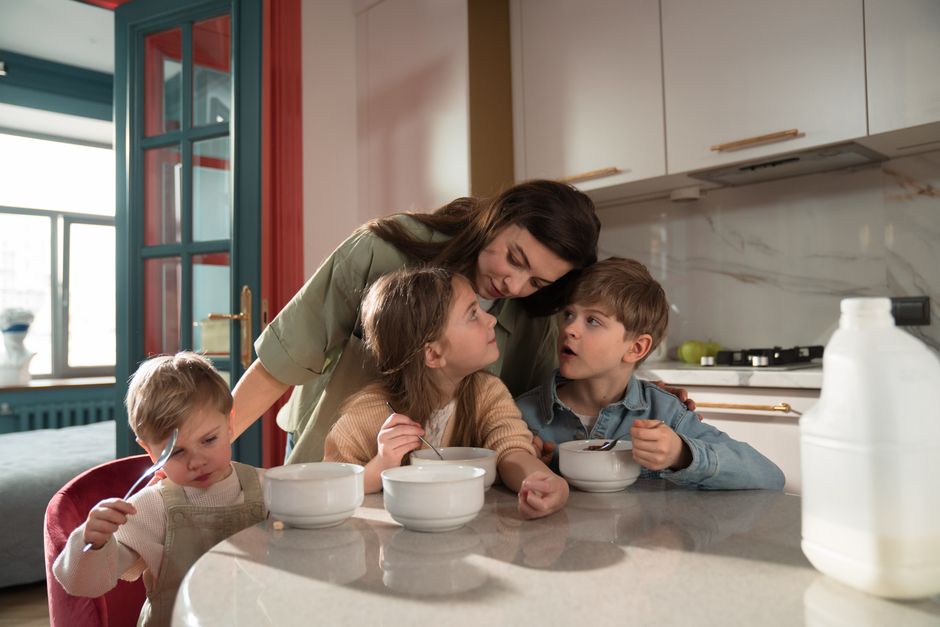
Tell your child the truth in words they can carry: “We do not have dinner tonight. This is an adult problem, and you did nothing wrong.” Then offer the security you can honestly give: “I am here with you, and I am working on the next meal.”
In March 1936, photographer Dorothea Lange stopped at a pea-pickers’ camp in Nipomo, California. The crop had failed, work had disappeared, and families were hungry. There she photographed Florence Owens Thompson with several of her children gathered close to her.
The outcome was still uncertain. Thompson could not tell her children exactly when work or enough food would come. Lange’s photograph, later known as Migrant Mother, became one of the most recognizable images of the Great Depression. The Library of Congress preserves the photograph and its documented history.
The picture holds two truths in the same frame: there was real scarcity, and the children still drew close to their mother. A parent facing an empty cupboard today needs language spacious enough for both truths.
Tell the truth at the child’s scale
Children notice an empty plate, a quiet kitchen, and an adult’s strained face. A vague reassurance such as “Everything is fine” can confuse them when the evidence says otherwise. A frightening explanation about rent, debt, or job loss can place an adult burden on small shoulders.
Use the smallest true sentence that explains tonight:
“We do not have food for dinner tonight.”
“Our food has run out, and I am trying to get help.”
“We need to wait before we can eat again.”
For a young child, stop there unless they ask another question. An older child may need slightly more context: “There was not enough money for groceries after the bills were paid.” Keep the explanation clear and free of blame.
Then name what remains secure. Say only what you can support:
“You are loved.”
“You did not cause this.”
“This is for the adults to solve.”
“I will tell you what I know when I know it.”
Security does not require a promise that food will arrive by morning. It grows when a child hears the truth from a steady adult and learns that they will not be abandoned inside it.
Replace uncertain promises with present commitments
A frightened parent may reach for certainty: “God will provide dinner tomorrow.” The hope behind those words matters, but the timing is more than the parent can guarantee.
Christian hope does not require us to predict what God will do next or when relief will arrive. Scripture makes room for hunger, lament, dependence, and practical care. It also calls God’s people to share food rather than using spiritual language as a substitute for help.
You might say:
“We can ask God for help, and we can ask people for help too.”
“I do not know when we will have more food. I will keep looking for help.”
“God cares about hungry people. We can tell Him we are scared and hungry.”
If your child says, “But you said God would provide,” resist the urge to defend yourself or explain suffering in one conversation. Try: “I hoped food would come today. It did not, and I am sorry. We can still pray, and I will keep asking people who may be able to help.”
That answer preserves faith without making the child responsible for believing hard enough. Hunger does not prove weak faith. Asking a relative, neighbor, church, school, food bank, or local support service for food is responsible action, not spiritual failure.
Change the frame without denying the facts
The frame through which we interpret an event shapes what we do next. “I have failed my child” can lead a parent toward shame and isolation. “My child needs truth, closeness, and practical help tonight” points toward actions that remain possible.
This reframing does not make hunger good. It does not erase poverty, illness, job loss, high prices, family breakdown, or public systems that fail people. It identifies the responsibility within reach without pretending the whole situation is under personal control.
After speaking with your child, take one concrete step. Send one direct message: “We have no food for dinner tonight. Can you help us find a meal?” Contact someone nearby, a school, a faith community, a food provider, or an emergency support service. Specific words make it easier for another person to understand the need.
If water is safe and available, offer it, but do not present water as a substitute for nutrition. If a child is weak, unwell, unusually sleepy, or has a medical condition affected by missed meals, seek urgent professional help through the appropriate local service.
Give the child one safe role
Children often try to solve an adult crisis. They may offer to stop eating, hide their hunger, or assume they have been too expensive. Release them from that responsibility.
Give them a small role that creates connection without transferring the burden. They can sit beside you while you make a call, choose a story to read, help write a short prayer, or name one person the family trusts. Do not ask them to reassure you or keep the situation secret.
Dorothea Lange’s photograph endured because it showed hardship without turning Florence Owens Thompson into an abstraction. A real mother and her children were living through an uncertain day in Nipomo. Their need was material, immediate, and worthy of attention.
At an empty table, the next faithful action may begin with one honest sentence: “There is no dinner tonight, and this is not your fault.” Then stay close, refuse promises you cannot guarantee, and make the first call for help.
Comments
No comments yet.