
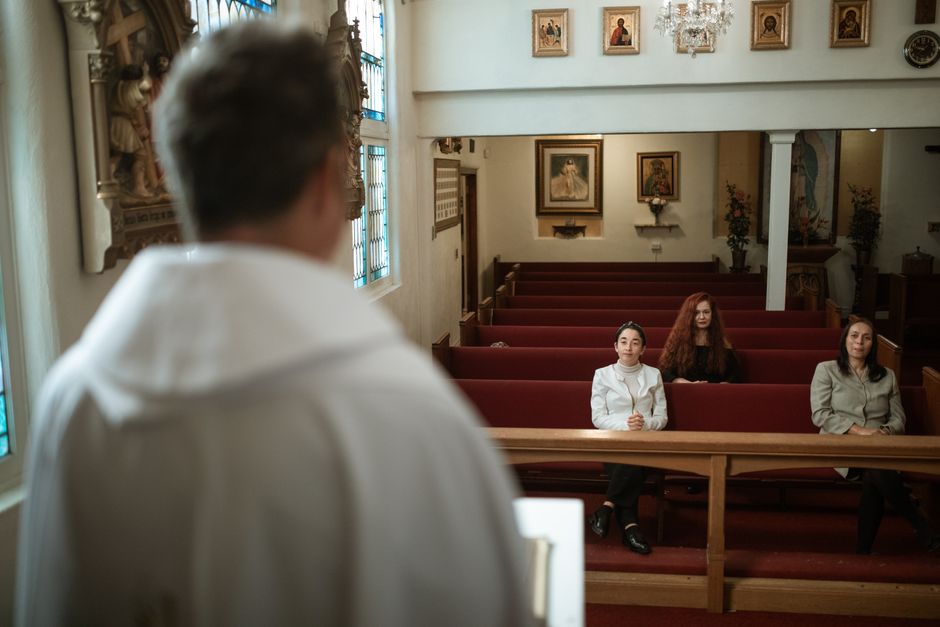
The person leading prayer after a community crisis should name the grief plainly, resist explanations that outrun what anyone knows, and offer hope grounded in God’s presence. Honest prayer gives sorrow room to speak while helping people take one faithful step together.
On September 14, 2001, Billy Graham stood in Washington National Cathedral while the United States was still counting its dead. Three days had passed since the attacks in New York, Washington, and Pennsylvania. President George W. Bush, members of Congress, religious leaders, survivors, and grieving families gathered for the National Day of Prayer and Remembrance. The outcome ahead remained uncertain. More attacks were feared, rescue work continued, and whole communities were absorbing losses they could barely describe.
Graham did not explain why God had allowed the attacks. He acknowledged evil, suffering, and the limits of human understanding. He also spoke of a foundation that could endure when familiar structures had fallen. The service, including his address, remains documented in the C-SPAN archive.
That moment offers a pattern for the person holding a microphone the Sunday after a local tragedy. People need more than polished reassurance. They need words spacious enough for shock, anger, silence, unanswered questions, and the stubborn possibility of hope.
Give grief its full weight
A community crisis changes the meaning of familiar phrases. “Everything happens for a reason” may sound comforting in an ordinary conversation. After a death, an act of violence, a fire, or a devastating diagnosis, it can feel like a door closing before grief has entered the room.
Scripture gives us a wider language. The Psalms ask how long suffering will continue. Job refuses the tidy explanations offered by his friends. Jesus weeps at Lazarus’s tomb even though resurrection is coming. Biblical hope does not require us to minimize what happened.
The prayer leader can say what the congregation already knows: people are frightened; families are hurting; some questions have no available answer. Specificity matters. Mention the people affected without exposing private details. Acknowledge those waiting for news, those carrying responsibility, and those whose ordinary routines now feel unsafe.
Children will also read the room, including every effort adults make to conceal fear. Children and unspoken fear explores why calm honesty serves them better than silence dressed as protection.
Withdraw from noise before choosing words
The days after a crisis fill quickly with alerts, opinions, rumors, requests, and pressure to say something meaningful. Regular withdrawal from that noise creates room for honest evaluation and prayer. Even twenty quiet minutes before drafting can reveal whether your first words serve grieving people or merely relieve your discomfort with silence.
Put the phone in another room. Read one lament slowly, perhaps Psalm 13, Psalm 22, or Psalm 130. Write down what is known, what remains uncertain, and what should stay private. Then ask a demanding question: Which sentence am I tempted to say because it sounds reassuring, even though I cannot honestly defend it?
Remove that sentence.
This withdrawal is no escape from responsibility. It helps you return with fewer assumptions and greater care. It also makes space to notice your own grief. A leader who refuses to admit personal limits may reach for certainty as a form of self-protection.
Honest prayer can hold words such as “we do not understand,” “we are afraid,” and “have mercy.” That kind of candor belongs within faith. Mother Teresa’s experience of spiritual darkness offers another reminder that unedited prayer can remain faithful prayer.
Anchor hope in presence and responsibility
Hope after crisis needs a clear foundation. Avoid promises that everyone will recover quickly, justice will arrive on schedule, or suffering will produce an obvious benefit. Discipline, prayer, and community care cannot prevent every consequence of trauma, illness, poverty, or violence.
Christian hope begins with God’s character and presence. “The Lord is near to the brokenhearted” offers companionship without a timetable. The resurrection declares that death will not have the final word, while leaving today’s tears fully real.
Then connect hope to one useful action. Pray for courage to sit with a grieving neighbor, bring a meal, give through a verified relief effort, follow guidance from responsible local authorities, or refrain from sharing unconfirmed claims. Keep the invitation modest. Exhausted people may have little capacity, and some will need to receive care before they can offer it.
The goal is faithful presence, not emotional performance. A prayer can end without making the room feel better. Relief may come later. For now, people may simply need permission to breathe, weep, and remain together.
Prepare a prayer the room can trust
Before Sunday, read the prayer aloud to one trusted person who understands the crisis. Ask them to mark every claim that assumes motives, predicts outcomes, or speaks for people whose experience may differ. Check names and public facts. Remove private information, speculation, and phrases that turn suffering into a lesson.
A simple structure can help:
- Name what happened using confirmed facts.
- Lament the harm and acknowledge what remains unknown.
- Ask for mercy, wisdom, protection, justice, and practical help.
- Affirm hope without promising a particular timeline.
- Invite one responsible act of care.
Billy Graham’s 2001 address did not resolve the national crisis from the pulpit. It gave public grief words, admitted mystery, and directed attention toward a foundation beyond the wreckage.
Before leading your community, step away from the noise. Sit with the facts and the sorrow. Then write a prayer that tells the truth, asks for help, and leaves enough silence for grief to be heard.
Comments
No comments yet.